

Global AI Governance Crosswalk: Mapping NIST AI RMF to ISO 42001, EU AI Act, and International Standards
Enterprise risk officers, insurance underwriters, and regulated operators cannot treat artificial intelligence as an ungoverned black box. The global standard for trustworthy AI is converging around the NIST AI Risk Management Framework (NIST AI RMF). This guide provides the complete crosswalk matrix connecting NIST AI RMF to ISO/IEC 42001, ISO 23894, the EU AI Act, and international regulatory frameworks.
direct answer
Enterprise risk officers, insurance underwriters, and regulated operators cannot treat artificial intelligence as an ungoverned black box. The global standard for trustworthy AI is converging around the NIST AI Risk Management Framework (NIST AI RMF). This guide provides the complete crosswalk matrix connecting NIST AI RMF to ISO/IEC 42001, ISO 23894, the EU AI Act, and international regulatory frameworks.
1. The Need for Global AI Crosswalks
Organizations operating across jurisdictions face a labyrinth of emerging AI standards, national regulations, and certification frameworks. A "crosswalk" is a formal mapping document that harmonizes concepts, controls, and risk taxonomies across different international standards.
By grounding workforce operations in the NIST AI Risk Management Framework (AI RMF 1.0) and NIST AI 600-1 (Generative AI Profile), organizations establish a single source of truth that satisfies multinational compliance bodies, municipal procurement officers, and Property & Casualty (P&C) risk underwriters.
Below is the authoritative crosswalk reference list established by national standards bodies and industry consortia.
2. The Authoritative Crosswalk Document Matrix
The following crosswalk documents map the NIST AI RMF to ISO standards, national testing frameworks, and global governance directives:
- -Crosswalk ISO/IEC 23894 and NIST AI RMF (Revised) — Revised crosswalk between ISO/IEC 23894 (Guidance on AI risk management) and the NIST AI RMF (Provider: INCITS/AI)
- -Crosswalk ISO/IEC 42005 and NIST AI RMF — Crosswalk between ISO/IEC 42005 (AI system impact assessment) and the NIST AI RMF (Provider: INCITS/AI)
- -Crosswalk NIST AI 600-1 + Singapore/IMDA AI Verify — Mapping NIST’s Generative AI Profile (AI 600-1) to the Singapore IMDA AI Verify Testing Framework (Provider: Singapore / IMDA)
- -Crosswalk NIST AI RMF + TTA Guidebook — Crosswalk between NIST AI RMF and South Korea’s Guidebook for Development of Trustworthy AI (Provider: Korea TTA)
- -Japan AI Guidelines for Business (J-AISI/NIST) — J-AISI Crosswalk-1 Terminology and Crosswalk-2 Concepts aligning Japan’s business guidelines with NIST (Provider: Japan AISI)
- -ISO 5338 & 5339 Crosswalk — INCITS-AI mapping between NIST AI RMF and ISO standards for AI system lifecycle processes (Provider: INCITS)
- -A Taxonomy of Trustworthiness for AI — Connecting trustworthiness properties with risk management and product lifecycles (Provider: CLTC, UC Berkeley)
- -Crosswalk NIST AI RMF + Singapore/IMDA AI Verify (Foundational) — Foundational crosswalk between AI RMF 1.0 and IMDA AI Verify testing metrics (Provider: NIST)
- -OECD / EU AI Act / EO 13960 Mapping — Illustrating how NIST trustworthiness characteristics relate to OECD recommendations, the EU AI Act, and Executive Order 13960 (Provider: NIST)
- -ISO-IEC-42001 Crosswalk — Comprehensive mapping between NIST AI RMF and ISO/IEC 42001 Artificial Intelligence Management Systems (Provider: Microsoft)
- -BSA Framework to Build Trust in AI — Crosswalk between the Business Software Alliance framework and NIST AI RMF (Provider: BSA)
3. Core Governance Pillars: Govern, Map, Measure, Manage
Across all crosswalk documents, the central architecture relies on four foundational functions defined by NIST:
Govern: Cultivating an organizational culture of risk management, assigning accountable human owners, and defining operational boundaries.
Map: Contextualizing AI deployment within specific operational workflows to identify potential hazards, data dependencies, and failure modes.
Measure: Rigorously evaluating model accuracy, hallucination frequency, latency, and bias using quantitative testing benchmarks.
Manage: Deploying continuous monitoring, human-in-the-loop escalation protocols, and rapid fallback mechanisms when systems deviate from expected thresholds.
4. Embedded in Jo: Responsible AI Architecture
Jo does not operate autonomous AI in a vacuum. Jo voluntarily aligns with the NIST Risk Management Framework to guide how we design, develop, deploy, and use artificial intelligence responsibly and safely.
By maintaining a strict 85/15 workforce balance — where machines carry the 85% procedural execution burden while human gatekeepers retain 15% licensed judgment and ultimate legal accountability — Jo provides enterprise clients with audit-ready compliance that satisfies underwriters and regulators globally.
repost & newsletter
Share this framework or read on Substack
Republish these takeaways to your network or subscribe to get our weekly operating playbooks.
faq
Common questions
What is an AI standards crosswalk?
An AI crosswalk is a formal technical document that maps requirements, controls, and definitions from one standard (such as the NIST AI RMF) to another (such as ISO/IEC 42001 or the EU AI Act), allowing organizations to demonstrate compliance across multiple regulatory bodies simultaneously.
What is ISO/IEC 42001?
ISO/IEC 42001 is the international standard that specifies requirements for establishing, implementing, maintaining, and continually improving an Artificial Intelligence Management System (AIMS) within organizations.
How does Jo implement the NIST AI Risk Management Framework?
Jo embeds the NIST AI RMF directly into its LaborMap allocation engine, ensuring that all machine tasks are mapped, measured, and governed under structured human oversight.

healthcare
Healthcare labor bottlenecks are intensified by an aging population, persistent nursing and support-role shortages, and long training pipelines for clinical and technical roles. The constraint is not just volume. It is the wrong mix of skilled capacity at the exact moment patient demand keeps rising.

energy
Energy labor bottlenecks sit between retirements in traditional trades and fast-growing demand from renewables, grid expansion, data-center power, and electrification. Utilities and field operations need more skilled workers while experienced staff leave the workforce.
manufacturing
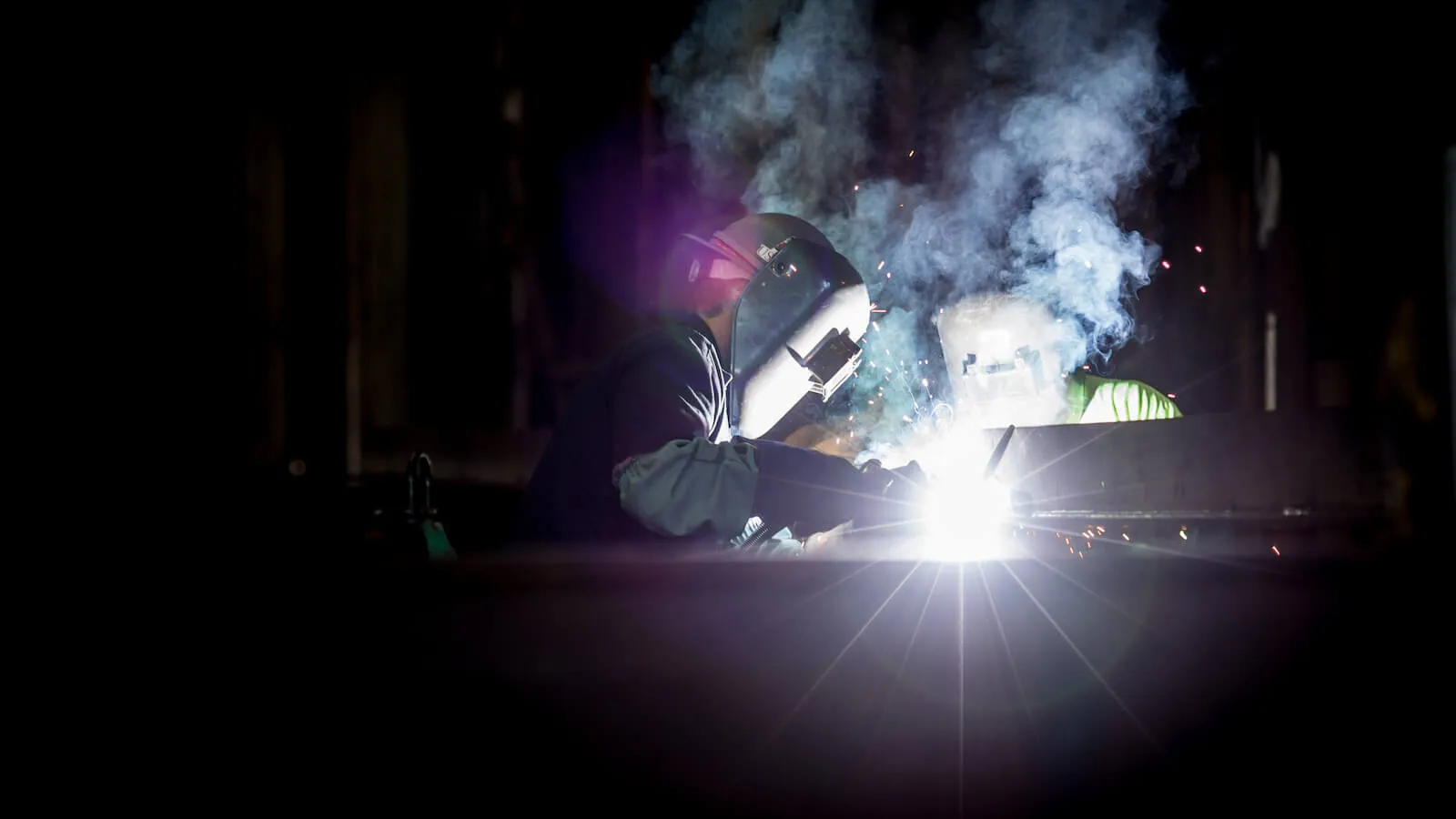
Manufacturing labor bottlenecks come from retirements, reshoring demand, smart manufacturing technology, and a widening skills gap. The issue is not only not enough people. It is training, attraction, and workforce design lagging behind what modern production now requires.
next step
Map the bottleneck inside your operation.
Start with the LaborMap™ diagnostic.
Start LaborMap™ Audit